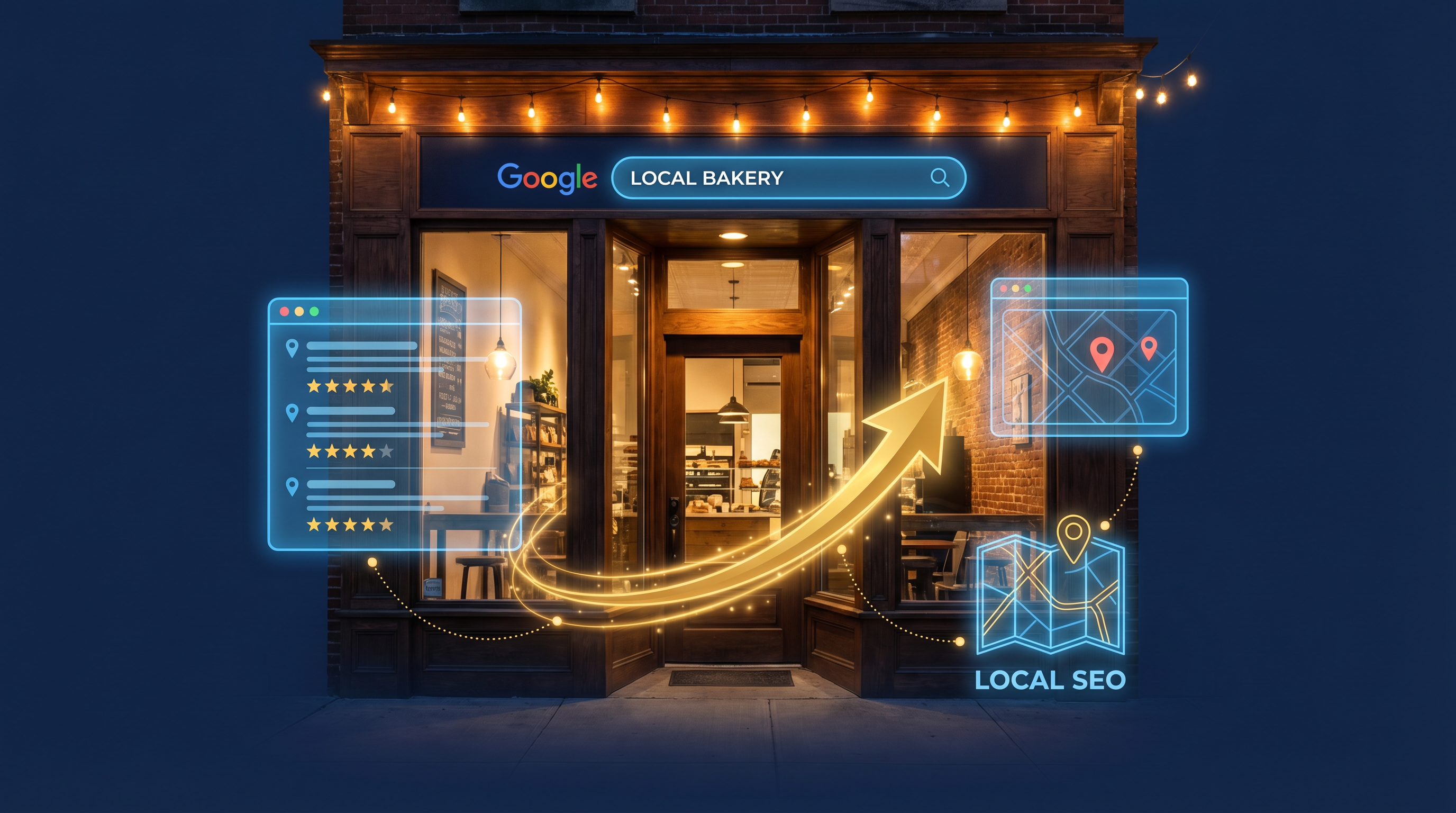

We provide customized SEO services that drive traffic to your site and help boost your online rankings.
Visual Rankings is your premier search engine content publishing, web design, and website maintenance company. We offer a free evaluation of your website to assess your current ranking and determine your optimization needs.
Unlike other SEO companies, we use that information to create a customized strategy that integrates marketing and advertising. These factors help improve your search engine optimization (SEO) rankings and increase traffic to your site through web and social media platforms.
Visual Rankings has more than a decade of experience achieving first-page Google rankings for local business websites. We don't commit you to a contract, and we offer complete transparency. We want you to know what's happening with your site and why. We're a trustworthy business whose focus is providing a positive experience for our customers.
SEO and Why it's Important
Web users perform over 3.5 billion searches on Google each day. With more than 1 billion websites competing for global attention, a site needs to achieve high rankings to (literally) rise above the competition. This visibility is a contributing factor to a company's success. The practice of driving high-quality website traffic via natural search results is search engine optimization (SEO).
SEO requires an understanding of what content online users are seeking and how they locate that information. Then, it's using that insight to write material for your site that will resonate with search engines. When successful, your company appears at the top of searches, which translates to revenue growth.
What Boosts Rankings?
Originally, the best way to increase your website's visibility was through keyword placement. The approach was more about quantity than quality, leading to a practice of keyword stuffing. Google algorithms would pick up on particular keywords, no matter their relevance, and bump websites up in rankings. These placements occurred regardless of consumer interaction with the site, or whether the keyword searches yielded any revenue.
Today, rankings are no longer created strictly from search terms. Websites are ranked based on related keywords and user experience (UX). The focus has shifted to the consumer and providing them with user-friendly results. Websites are now rewarded for providing content that fulfills a need for the consumer.
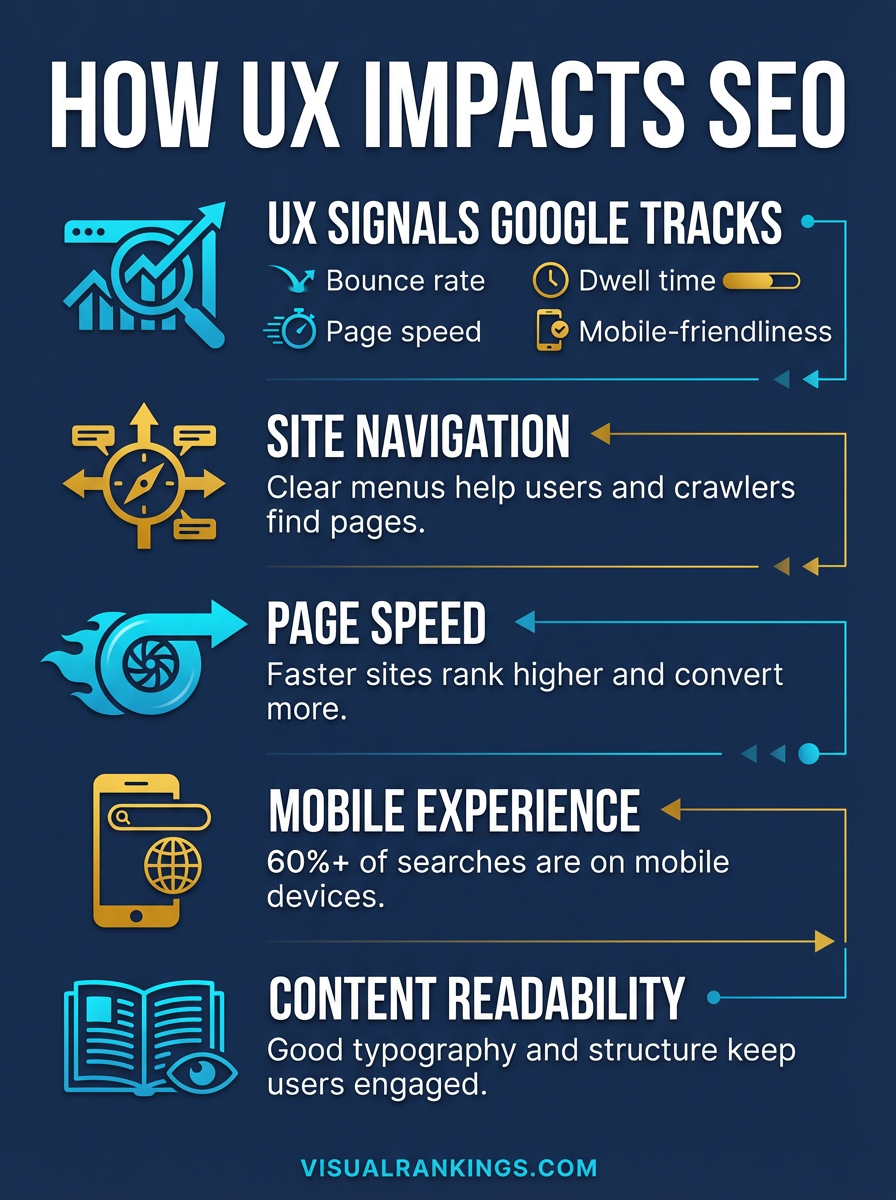
Search engines are interested in your site's navigability, quality of content, and whether it engages visitors and encourages them to stay. UX plays a significant role in search engine optimization and determining a website's ranking.
UX is About Consumer Insight
More than a visitor's encounter with your website, UX is the understanding of those visitor's needs. It's the study of consumer values, abilities, and limitations, and applying that information to create a meaningful and valuable exchange.
A successful UX occurs when someone visits your site, scrolls through multiple pages, understand who you are and what you do, and ultimately fulfills their needs.
Providing a positive UX means understanding consumer pain points and removing obstacles in their path. You want to deliver a smooth process for visitors to find your website, engage with your information, and convert that encounter into profit. Every effort you make to provide a positive UX leads to improved SEO, which boosts your site's ranking and increases revenue.
Why UX is Significant
Focusing on UX has become increasingly profitable. Companies that excel in user experience see an increase in revenue and customer loyalty. Their customers are six times more likely to try their other products/services, four times more likely to spread positive reviews, and two times more likely to purchase from them again.
Additionally, customers who enjoy a positive experience are likely to spend 140% more than customers who report negative experiences.
Customers make long-term decisions about a company based on their interaction with the brand. The quality of their engagement influences their buying decisions and impacts their loyalty. UX is essential for driving revenue and increasing return on investment (ROI).
UX Best Practices to Improve SEO
SEO and UX now have a shared goal, which is to create a positive website experience that converts visitors into buyers. UX improves the effectiveness of a website's search-ability. It converts traffic by customizing experiences for a target audience. UX helps consumers find a product or service that fills a need and converts visitors into return customers. There are several ways to improve usability and create a positive UX that will benefit your SEO.
Follow Standard Web Design Practices
Studies show that there are standard website design elements consumers expect to find online, like a logo in the top left corner and contact information at the top right of the screen. By adhering to these standard expectations, you offer familiarity and minimize confusion for your visitors, helping to create a smooth UX.
Provide Easy Navigation
Reduce the number of steps and clicks that are needed for visitors to fulfill their needs on your site. Simplify the process by offering clear search options and identifiable direct links to useful information. The longer visitors spend wandering your site without locating the information they seek, the higher the frustration, the worse the UX, and the lower the SEO rankings.
Reduce Page Load Time
Optimizing your webpage load time helps users reach their destination faster. Research shows that one additional second of load time reduces conversions by 7%. Faster page speeds boost user engagement, which leads to increased conversion rates. Reducing server response time, minimizing image sizes, and using external hosting platforms can all reduce load time and increase SEO.
Design for Mobile Applications
Consumers today are more apt to conduct online searches from their mobile devices. In fact, up to 70% of web traffic comes from mobile phones. Capitalize on that audience by building a mobile-friendly site that functions across a variety of applications. A website that doesn't translate on mobile devices creates a poor UX and can tank your SEO.
SEO Services that Yield Results
Not only are there a myriad of factors at play when it comes to successful SEO, but search engine algorithms are continually changing. Engage Visual Rankings as your internet marketing and SEO consultants. We'll work closely with you to determine and manage everything you need for a successful online presence. Let us work for you and put your best interests above our own.
Contact us today for a free needs evaluation and proposal. We look forward to learning how we can bring you more customers and propel your website up the search rankings.
Frequently Asked Questions

Jeff Tropiano
Jeff founded Visual Rankings in 2008 after more than a decade optimizing websites for Fortune 500 companies and local businesses across the United States. His work has delivered top-3 rankings for clients in medical, legal, dental, and construction verticals — including some of the most competitive SERPs in Dallas, Seattle, and Redding. Jeff speaks regularly on Core Web Vitals, AI-era SEO, and local search.