

You know that a solid marketing strategy is vital for the continued success of your business. Nevertheless, do you know whether your marketing efforts are effective? Or if they are, exactly what makes them effective? In terms of marketing, having a firm grasp on what's working for your business and what isn't is the key to growing your business over time. Key performance indicators (KPIs) can help you ensure that the time and money you allocate for marketing is spent wisely and is serving your business well.
What Are KPIs?
In marketing, the term "key performance indicator," or KPI, refers to a set of quantifiable measurements that can be used to gauge a business's performance over time. Likewise, KPIs can help evaluate a business's progress in achieving certain business goals. Also, KPIs serve to compare the business's performance to other businesses within the same sector. Performance metrics are directly tied to a company's marketing strategy. Therefore, monitoring the right key performance indicators can help you determine whether you're on the right track with your marketing efforts or if you need to make some calculated changes.
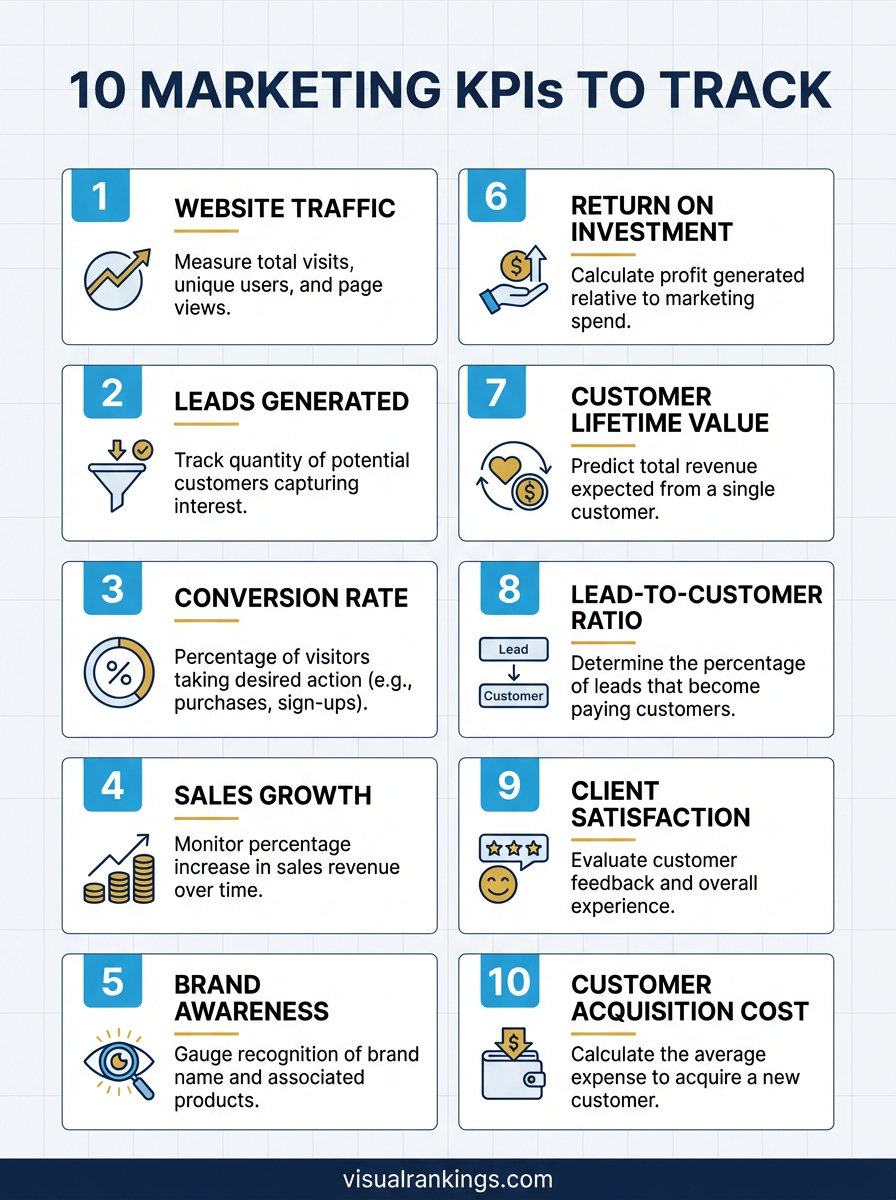
The following are ten common marketing KPIs to consider for your business and what they each measure:
- Website traffic: Who is visiting your site, where they're coming from, and what they did once they got to your site
- Leads generated: The number of sales leads generated from marketing efforts
- Conversion rate: The percentage of website visits that result in a desired action (i.e. making a purchase or filling out a form)
- Sales growth: The percentage growth of your business' sales over time
- Brand awareness: How familiar your target audience is with your brand or product
- Return on investment: How much revenue your business generates per dollar spent on marketing
- Customer lifetime value: How much revenue your business will generate per customer throughout your relationship with the customer
- Lead-to-customer ratio: How many leads become customers
- Client satisfaction: How happy your clients are with your business
- Customer acquisition cost: The cost associated with acquiring a customer (convincing a prospective customer to purchase your product or service)
Choosing the Right KPIs for Your Business
KPIs can vary significantly from company to company and from industry to industry. Selecting the right KPIs to evaluate your business's marketing strategy depends on exactly what it is you want to track. It takes time, effort, and planning to ensure that the metrics you choose will tell you what you want to know. Relevant KPIs can help you gain valuable insight into your business's overall performance. As well as to gain insight on the performance of specific areas or departments within your company. To determine which KPIs you should focus on for your business and what they mean for your marketing strategy, and to ensure that the KPIs you're tracking continue working for you over time, consider these tips:
- Set clear, measurable business goals
- Think about what kind of KPIs will offer the best data regarding how your business is progressing towards those goals (i.e. data on daily sales, site traffic, or conversion rate)
- Focus on four and ten KPIs that directly correspond to your business goals
- Consider what types of KPIs are most commonly necessary to measure success within your industry
- As your business objectives change over time, be sure to review your marketing strategy and update your KPIs accordingly
How Visual Rankings Can Help
Measuring your marketing strategy with KPIs is an important part of figuring out which marketing efforts are working for your business and which aren't. Contact Visual Rankings today for a customized approach to SEO and content marketing that will give you an edge over the competition.

Joshua Cabe Johnson
Joshua Cabe Johnson leads content strategy and on-page SEO execution at Visual Rankings. His work focuses on making technical SEO accessible to small-business owners and preparing client websites for AI answer engines (ChatGPT, Perplexity, Gemini, Claude). Joshua has consulted with medical practices, law firms, and construction companies across the DFW metro since 2019.